
Events In The History Of Aave Rates
Exploring major events in the history of Aave interest rates including the USDC depeg, ETH PoW fork, sUSDe looping and the rsETH liquidity crunch.
Lending markets experience spikes in demand when the environment becomes risky or offers opportunities for profit. This article examines four events that influenced Aave markets.
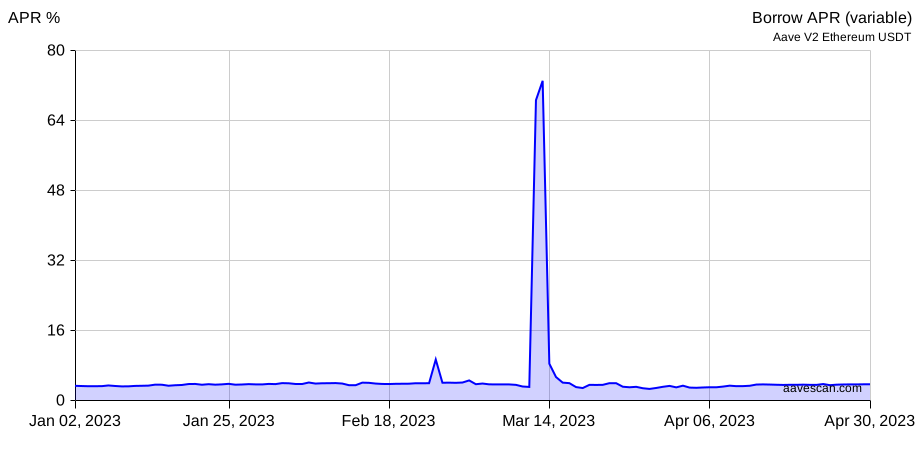
The USDC Depeg In March 2023
On March 11, 2023, USDC lost its dollar peg after Circle revealed $3.3 billion of reserves were stuck in Silicon Valley Bank. Investors rushed to USDT, an alternative stablecoin, triggering a surge in demand across decentralised exchanges and DeFi lending markets. On Aave this demand pushed USDT borrow rates above 60% APR as investors sought to obtain USDT to sell at a premium across decentralised exchanges and/or to purchase USDC at a discount. Rates normalized once USDC regained its peg four days later.
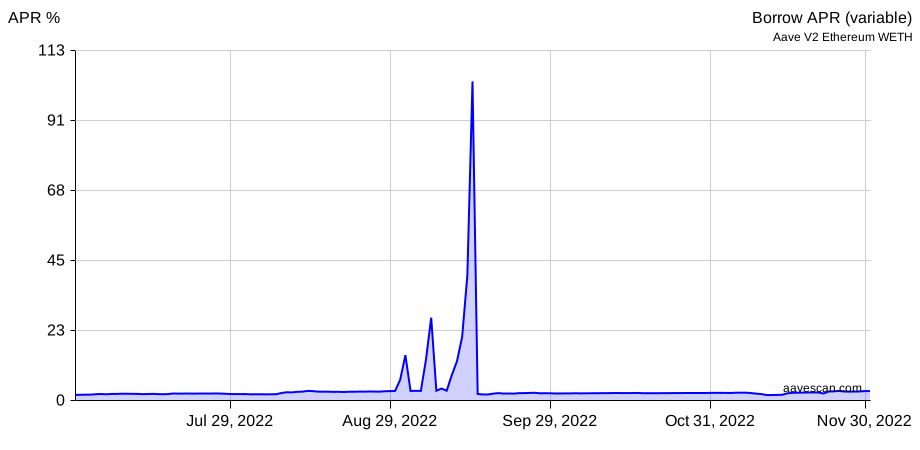
The Ethereum PoW Fork In September 2022
During the Merge, Ethereum’s transition to Proof of Stake on September 15, 2022, traders positioned for the anticipated Ethereum PoW (ETHW) airdrop. To qualify, users needed to hold ETH in their wallets at the time of the fork. This led to a sharp increase in demand for ETH onchain, driving Aave’s ETH borrow rates above 90% APR as users took out active loans in ETH to maximize airdrop exposure. During this period, funding rates across perp venues went negative as traders hedged ETH exposure. Rates quickly returned to normal levels after the merge was completed and the airdrop snapshot passed.
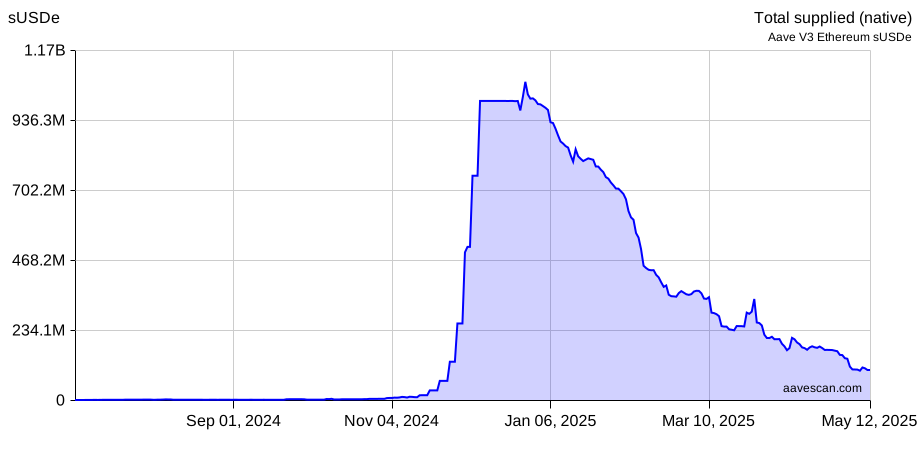
The sUSDe Leverage Loop In 2024
In 2024, crypto markets saw sustained positive funding rates, creating an ideal environment for Ethena’s sUSDe to generate high yields via its delta-neutral basis trade. As sUSDe yield grew popular, investors piled into sUSDe and looped it on Aave: depositing sUSDe, borrowing stablecoins/ETH, swapping back to sUSDe and repeating to maximize exposure to the yield. This drove rapid growth in sUSDe supply and Aave deposits. The loop began to unwind when funding rates declined, compressing yields and reducing the profitability of the trade, leading to deleveraging across markets.
The rsETH Liquidity Crunch In April 2026
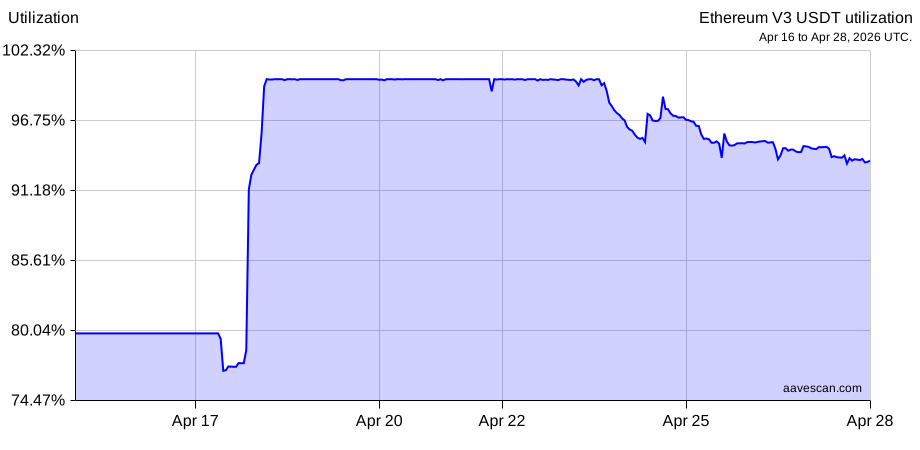
On April 18, 2026, Kelp’s rsETH bridge was exploited and the attacker used Aave to borrow ETH against fraudulently minted rsETH. Aave froze the rsETH and ETH markets as the protocol assessed the fallout and users began to panic about the possibility of bad debt. In the hours that followed, Ethereum V3 USDT liquidity was drained from both sides as suppliers pulled capital to de-risk and borrowers drew stablecoins to secure liquidity. Aavescan hourly snapshots show USDT utilization moving from 77.4% at 17:00 UTC on April 18 to effectively 100% by 03:00 UTC on April 19.
Utilization then remained above 99% for 135 consecutive hours, from April 19 through April 24 UTC. In practice, that meant very little idle USDT remained in the pool, so withdrawals were heavily constrained until panic subsided, fresh supply returned and borrow demand eased.
Aavescan
Explore all the data featured in this article on Aavescan.